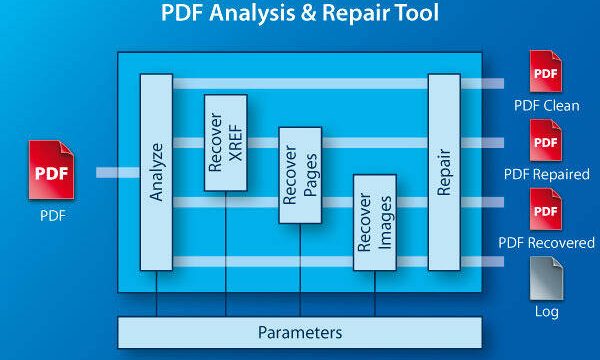
Ever opened a PDF only to see a blank page, garbled text, or an error saying the file is damaged? You’re not alone. Malformed PDFs happen when the file’s internal structure gets corrupted — maybe from a bad download, a crash while saving, or a shoddy conversion. This guide is for anyone who’s staring at a broken PDF and needs to get the content out. By the end, you’ll have a repaired PDF (or at least recovered text) without spending a dime.
We’ll use free, command-line tools that work on Windows, Mac, and Linux. Don’t worry if you’ve never touched a terminal — I’ll walk you through each command. You’ll learn to diagnose what’s wrong, attempt a structural repair, extract usable content, and know when to cut your losses. Let’s fix that file.
What You’ll Need
- The malformed PDF file (keep a backup!)
- A computer with internet access
- qpdf (free): download from sourceforge.net/projects/qpdf/
- Ghostscript (free): download from ghostscript.com
- A text editor like Notepad++ (Windows) or VS Code
Step 1: Diagnose the Damage
First, try to open your PDF in a regular viewer like Adobe Acrobat or your browser. Note the error message. Then run a quick check with qpdf to see what’s broken.

Open a terminal (Command Prompt on Windows) and run:
qpdf –check broken.pdf
qpdf command
This will list warnings and errors. If it says “not a PDF file” in the first line, the file header is corrupted — we’ll fix that in Step 3. If you see xref table issues or syntax errors, continue to Step 2.
Step 2: Attempt a Linearized Repair with qpdf
qpdf can attempt to recreate the PDF structure by linearizing and normalizing the file. This often fixes cross-reference table corruption.

Run this command:
qpdf –linearize broken.pdf repaired.pdf
qpdf linearize command
If you get an error about the file not being a PDF, move to Step 3. Otherwise, open repaired.pdf. If it looks good, you’re done! If not, try the –replace-input option on a copy: qpdf –replace-input broken_copy.pdf. Still broken? Move on.
Step 3: Fix a Corrupted Header or Trailer
Many malformed PDFs have a damaged header (first line) or trailer (last lines). Use a hex editor or a text editor that can handle binary files to fix these.

Open a copy of the PDF in your text editor. The very first bytes should be “%PDF-1.” followed by a number (like 1.4). If it’s missing or garbled, type it in. Save as a new file. Then run qpdf –check on it. If the error was about the header, this often solves it. Similarly, the last line of the file should be “%%EOF”. If missing, search for “xref” and find the cross-reference offset near the end — that’s another approach, but often just appending %%EOF at the end works. For a more thorough fix, use the repair 0KB PDF guide if the file size is suspiciously small.
Step 4: Use Ghostscript to Recover Content
Ghostscript can interpret and render PDF content, ignoring structural errors. It’s great for extracting text and images from a malformed file.

Run this command:
gswin64c -sDEVICE=pdfwrite -o repaired_gs.pdf broken.pdf
Ghostscript PDF repair command
On Mac/Linux use “gs” instead of “gswin64c”. This tries to distill the PDF into a clean new file. If it fails, try adding -dPDFSETTINGS=/default. If Ghostscript can’t even parse it, try extracting raw text with pdftotext:
For text-only recovery, use the command:
pdftotext broken.pdf output.txt
pdftotext command
You may need to install poppler-utils on Linux or download Xpdf tools for Windows. Even if the PDF is mangled, pdftotext might pull out readable text.
Step 5: Manual Surgery with a Hex Editor
When all else fails, you can manually inspect and repair the file structure. This is advanced but often works if only a small section is corrupted.

Open the PDF in a hex editor (like HxD for Windows). Look for the xref table starting with “xref”. Check if the entries (numbers) are coherent. If you find a corrupt object, you might delete it or replace it with a valid object from another PDF. This is risky — always work on a copy. Alternatively, you can use the PDF validation repair guide to understand the structure better.
Common Pitfalls
- Working on the original file without a backup — always duplicate the malformed PDF before trying any repair step.
- Using online repair tools that upload your file — they might not be secure, and they often fail on severely corrupted files.
- Ignoring the header: the %PDF signature is essential; even a single misplaced byte can break the whole file. Double-check with a hex editor.
Where to Next
If this guide saved your PDF, you might also want to check out our in-depth PDF validation repair post for prevention tips. And if you ever run into a zero-byte PDF, we’ve got you covered with the repair 0KB PDF article. Good luck, and may your PDFs always open on the first try!