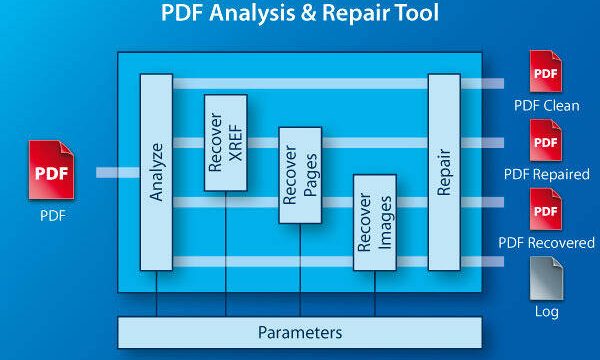
You’re knee-deep in a project and your go-to PDF viewer throws an error: ‘File is damaged.’ Normally you’d reach for a PDF repair tool, but you don’t have one installed—and you don’t want to download sketchy software. This guide is for you. By the end, you’ll know how to recover that PDF using only tools already on your computer or a free online service.
No tech skills needed, just a browser and a bit of patience. We’ll walk through five methods that handle most corruption problems—from opening in a different reader to pulling out text with Google Docs. Let’s get your file back.
What You’ll Need
- The corrupted PDF file (or a copy)
- A computer with an internet connection
- A web browser (Chrome, Firefox, Edge, etc.)
- A Google account (for the Google Docs method)
- Basic comfort with command line (for the CLI method, optional)
Step 1: Try a Different PDF Viewer or Browser
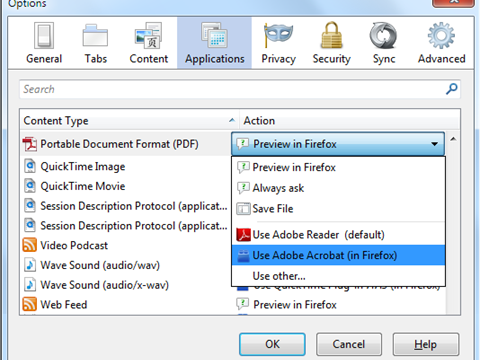
Sometimes a PDF is not truly corrupted—your viewer just doesn’t like it. Open the file in another program. If you normally use Adobe Reader, try Chrome’s built-in PDF viewer or Microsoft Edge. Drag the file into a browser tab. Browsers are surprisingly good at rendering finicky PDFs because they ignore minor errors.

If the file opens, save a clean copy: click the print icon and choose ‘Save as PDF’ (or the equivalent in your browser). This forces the browser to rebuild the file from scratch. You’ve effectively recovered the PDF without any extra software.
Step 2: Extract Text and Images via Google Docs
Google Docs can import PDFs and convert them to editable text—even if the PDF is damaged. Upload the file to Google Drive, then right-click it and select ‘Open with > Google Docs.’ The service will try to extract the textual content and any embedded images.

You’ll get a Google Doc version of your PDF. You can then download it back as a PDF (File > Download > PDF Document). This works best for text-heavy PDFs. If the original had complex formatting, it might look different, but you’ll have the data. For a dedicated tool, you can always upload pdf to repair using a specialized service.
Step 3: Use Your Browser’s Built-in ‘Print to PDF’ Trick
Even if the PDF won’t open normally, you might be able to open it partially in a browser. Try dragging the file into Chrome or Firefox. If the first few pages render, hit Ctrl+P (Cmd+P on Mac) and in the print dialog, choose ‘Save as PDF’ as the destination. The browser will re-encode the visible pages into a fresh PDF.

This method discards any pages that didn’t load. You may lose the tail end of the document, but it’s a quick way to salvage most of your content. Combined with the Google Docs method, you can often recover both text and layout.
Step 4: Use Command-Line Tools (Mac/Linux)
If you’re comfortable with the terminal, `pdftotext` and `pdfimages` (from the poppler-utils package) can extract content from damaged PDFs. Install poppler-utils via your package manager (e.g., `sudo apt install poppler-utils` on Ubuntu, or `brew install poppler` on Mac). Then run:
This pulls out all text. For images, use `pdfimages -j corrupted.pdf image_prefix` to extract JPEGs. You’ll end up with separate assets that you can recombine using any PDF editor. If your pdf file is damaged, this command can still often grab raw data.
Step 5: Use a Free Online PDF Repair Website
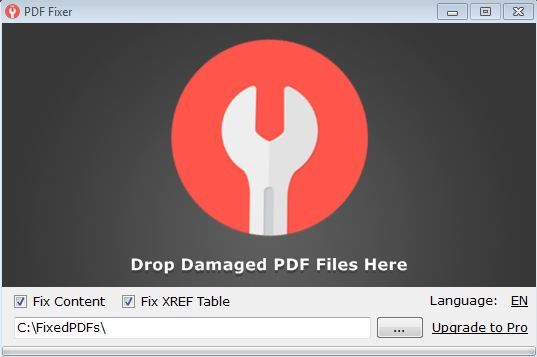
When all else fails, a dedicated online service can fix the file for you. No download required—just upload and wait. A reliable pdf repair website will scan the file, rebuild the internal structure, and let you download a clean version. Many options are free for small files. For larger files, check if the site offers a tiered service.
Search for ‘repair pdf for free online‘ to find top-rated tools. Upload your file, wait a minute, and download the repaired PDF. This method is the most hands-off, but make sure the site respects your privacy—avoid uploading sensitive documents to unknown servers.
Common Pitfalls
- The PDF is too large for online tools: Many free services cap file size at 50 MB. If yours is bigger, try the Google Docs method (which handles larger files) or split the PDF first using your browser’s print-to-PDF on a few pages at a time. For very large files, read our guide on how to repair large PDF files.
- The PDF contains only scanned images: Text extraction tools (like pdftotext) will produce empty output. You’ll need to recover pdf images instead — use pdfimages or the online service’s image extraction feature.
- The PDF is password-protected: Without the password, none of these methods will work. Try to recall the password or use a password recovery tool (if you own the file). Otherwise, the file is locked.
Where to Next
You’ve just learned how to recover a PDF without any local software. If you need more specialized help, check out our full guide on how to fix a damaged pdf step by step. And if your PDF disappeared from the cloud entirely, see how to recover pdf from google drive. For other common issues, browse the PDF Repair & Tools section.