Ever opened a PDF and got a cryptic error like ‘Not a PDF file’ or ‘Corrupted file’? That’s often a sign the PDF header got messed up. This guide is for anyone who’s hit that wall — maybe the file was partially downloaded, corrupted during transfer, or mangled by a buggy app. By the end, you’ll know exactly how to inspect, repair, or rebuild a PDF header using free tools. You’ll have your file back in readable shape and understand what caused the problem.
We’ll start with the absolute basics: what a PDF header looks like, why it matters, and how to spot a bad one. Then we’ll walk through two solid repair methods — one using a simple online tool, another using a hex editor for more control. No prior experience needed. You’ll also learn how to avoid common mistakes that make things worse. Let’s fix that header.
What You’ll Need
- The corrupt PDF file you want to repair
- A backup copy (just in case)
- A hex editor (free options: HxD for Windows, Hex Fiend for Mac, or any online hex viewer)
- Optional: An online PDF header repair tool (e.g., PDF Repair Toolbox or similar)
- A plain text editor (Notepad, TextEdit) for a quick fix if the header is only slightly off
Before you jump in, make sure you’ve ruled out simpler issues. If you haven’t yet, use our guide to check pdf corruption on the file. It might just need a simple re-download.
Step 1: Understand What a PDF Header Looks Like
Every PDF file starts with a header like ‘%PDF-1.4’ or ‘%PDF-1.7’. The percent sign is the very first character. This line tells software what PDF version the file uses. If that line is missing, truncated, or corrupted, most PDF readers will reject the file immediately. Grab your hex editor and open the broken PDF. Look at the very first bytes: a valid header is ASCII text. You should see ‘%PDF-1.’ followed by a digit (0-7). If you see gibberish or nothing, the header is toast.

Step 2: Quick Fix with a Hex Editor
If the header is missing or partially corrupted, you can manually replace it. First, make a backup of your file. Then open it in your hex editor. Delete everything before the ‘%’ sign if there’s junk. If the entire header is gone, insert the correct header at the very beginning. For most modern PDFs, use ‘%PDF-1.4’ or ‘%PDF-1.7’. Save the file and try opening it in a reader. If it works, you’re done. If not, the header might be okay but the file has other issues — like a broken xref table. In that case, you’ll also need to fix pdf xref table.

Step 3: Use an Online Header Repair Tool
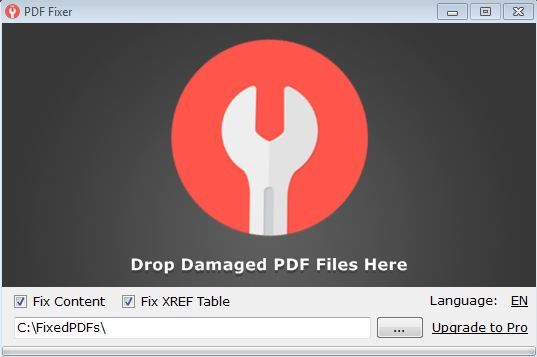
If manual hex editing feels risky, try an online PDF repair tool. Upload your broken file to a reputable service like PDF Repair Toolbox or Smallpdf’s repair feature. These tools scan the entire file, detect header corruption, and often restore it automatically. They’re especially useful if the header is only slightly off — like a missing ‘%’ sign. After the repair, download the fixed file and open it in your reader. Double-check that the content is intact. Keep in mind that online tools may have file size limits and privacy concerns; don’t upload sensitive documents.

Step 4: Advanced Repair with Ghostscript
For stubborn headers that won’t respond to simple fixes, use Ghostscript — a powerful command-line tool for PDF processing. Install Ghostscript on your computer. Open your terminal (Command Prompt on Windows) and run: gs -o repaired.pdf -sDEVICE=pdfwrite -dPDFSETTINGS=/prepress corrupt.pdf. This re-writes the entire PDF with a fresh header. It works even when the header is completely missing or garbled. If you need more details, check our guide on ghostscript repair pdf for step-by-step commands.

Step 5: Verify the Repaired PDF
After any repair, always verify the file. Open it in multiple PDF readers (Adobe Acrobat, your browser, a free alternative like Foxit). Check that the page count matches the original, text is selectable, and images render correctly. If the document still acts weird — especially if it shows blank pages — you might need to recover blank pdf using specialized techniques. Also, run our check pdf corruption utility to confirm no other issues remain.

Common Pitfalls
- Overwriting the wrong bytes: If you blindly delete or insert bytes without understanding the structure, you can destroy the file completely. Always work on a copy.
- Using the wrong PDF version: Inserting ‘%PDF-1.2’ into a file with advanced features (like JavaScript or interactive forms) may cause other errors. Stick to ‘%PDF-1.4’ or ‘%PDF-1.7’ unless you know the original version.
- Assuming one fix works for all: A missing header is often accompanied by other corruption (xref table, cross-reference streams). Repairing only the header may yield a file that opens but has missing content. After fixing the header, always test thoroughly.
Where to Next
Now that you’ve mastered PDF header repair, you might want to dive deeper into other common PDF fixes. Our guide on repair a pdf document covers general corruption recovery, and we have a dedicated post on fix pdf xref table if you encountered table issues. If the file is still giving you grief, ghostscript repair pdf is a lifesaver. Happy fixing!